
Brand can be deployed in many ways to maximise the impact it has on your business. To do this effectively, it’s often useful to reframe what a business actually does - stripping it back to its simplest function. When you understand the core exchange taking place, you can better understand how brand influences perception, value, and choice. Every business, regardless of category, lives or dies based on how well its brand communicates who it is, what it offers, and why it matters.
Below, we look at how branding supports different types of businesses and the unique opportunities each has to use brand as a strategic tool.
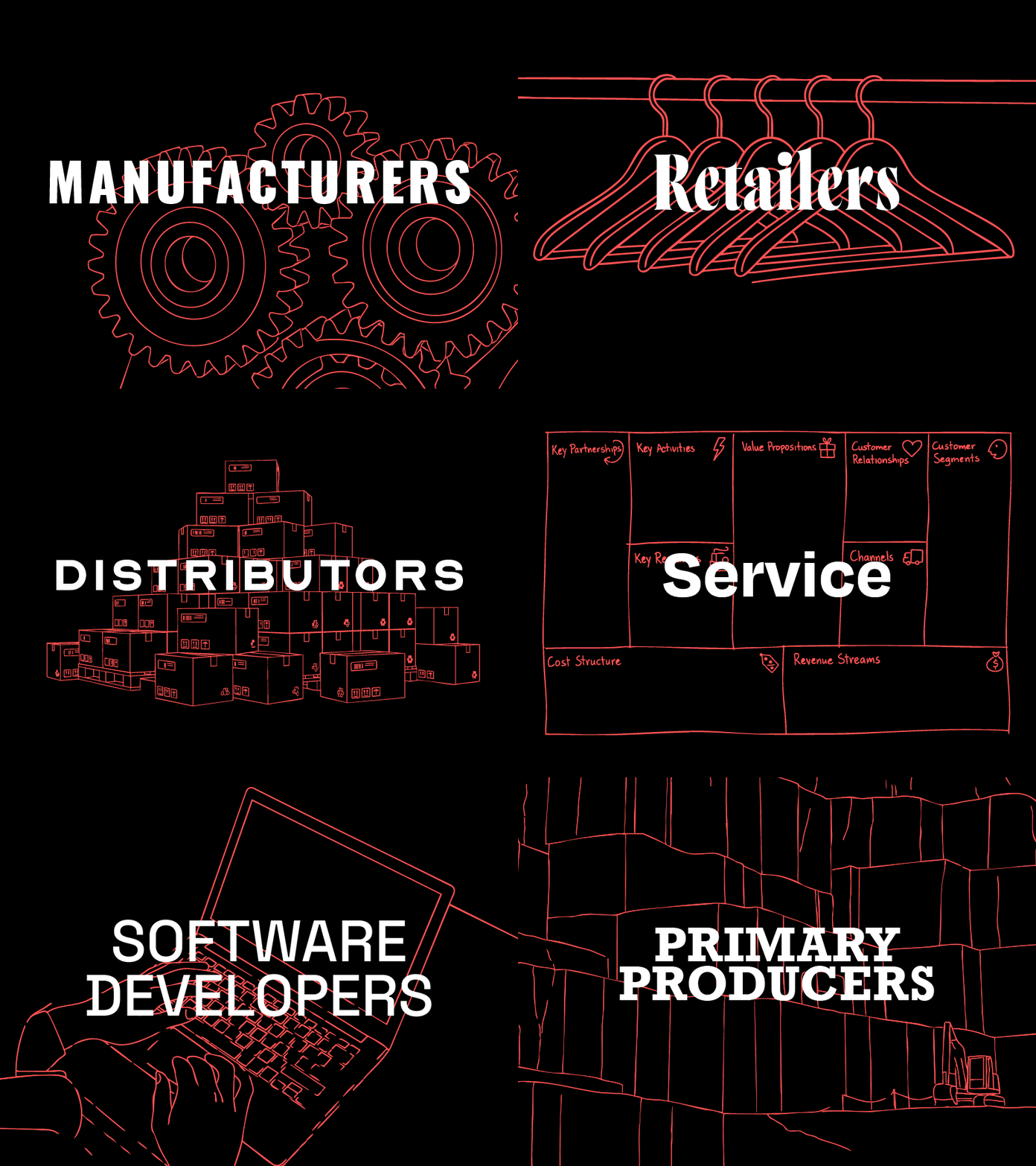
There are generally two types of manufacturers: those producing goods sold directly to end users (like a food company), and those making components that go into other products (such as electrical parts within a machine).
How brand can help:
For direct-to-consumer manufacturers, branding is often the most visible and widely recognised deployment. Identity, packaging, and product experience shape how people feel about a product long before they try it. Strong brands build emotional connection, drive preference, and enable premium positioning.
For component manufacturers - who operate behind the scenes - brand becomes a signal of reliability, innovation, and consistency. Here, brand builds trust with procurement teams, engineers, and OEM partners, positioning the manufacturer as a safe and credible choice.
Retailers often sell products made by other businesses and can specialise in one category or span many, operating in physical locations, online, or both simultaneously.
How brand can help: Because retailers most often don’t make the products they sell, brand differentiation centres on experience - expertise, atmosphere, convenience, curation, and service. Their brand expresses personality, values, and trustworthiness. A strong retail brand makes the act of buying feel easier, more enjoyable, or more aligned with customer identity. It’s the promise of how you’ll shop, not just what you’ll buy.
Read how this high street brand repositioned to go against the industry norm.
Distributors sell other businesses’ products, usually supported by specialist knowledge or training. They build close relationships with both manufacturers and customers, often acting as the critical link in the supply chain.
How brand can help: In distribution, brand fosters credibility and reliability. It signals that the distributor understands the products deeply, can solve problems quickly, and can be trusted as a long-term partner. Brand becomes shorthand for service quality, technical expertise, and logistical efficiency - vital in a category where reputation carries significant weight.
This business created a highly targeted brand to attract a different type of audience
The range of service providers is huge. From hairdressers and refuse collection to consultants, agencies, experts, and advisors it is arguably the largest category. The UK is a service economy. These businesses sell skills, knowledge, insight and experience rather than physical goods.
How brand can help: Because the offer is intangible, brand becomes the product. It conveys professionalism, authority, personality, and perspective. Design and messaging can also help productise services - turning expertise into clear, understandable, repeatable offerings. Strong service brands reduce perceived risk and increase client confidence.
This international interiors consultancy branded their process to define what made them different
Software developers are, in effect, digital manufacturers. They create applications and tools that customers use directly, either as branded products or as customisable white-label solutions.
How brand can help: Brand guides not just visual identity, but user experience, interface design, tone of voice, customer onboarding, and ongoing support. A strong software brand builds trust in security, usability, and innovation - key purchase drivers in a category where users expect seamless, intuitive interaction.
This healthtech business used brand to compete against much bigger competitors
Primary producers supply raw materials such as steel, aggregates, or agricultural goods.
How brand can help: Even in commodity markets, brand can differentiate through reliability, ethical sourcing, sustainability standards, and consistency of supply. These primary producers could be seen as manufacturers, service businesses and distributors. Brand becomes a signal of quality and accountability - attributes that influence procurement decisions and long-term contracts.
Of course, when you simplify businesses into basic transactions they become easier to understand. But we know it's more complex than that, especially when you factor in different business models on top. In reality, many businesses are a combination of two, three or all of the above, either by design or through organic growth. Just look at the Automotive sector - those businesses manufacture machines, design retail experiences and provide a comprehensive aftersales service all underpinned by digital apps created by in-house software teams.
Read how this healthcare manufacturer became a global leader in their field
In the business of brand, every organisation - regardless of size, sector, or offering - benefits from clarity and consistency of message and emotional resonance. Reframing what you do to the basic functions is a great starting point for thinking differently about how you deliver it.
When deployed strategically, brand becomes more than just a marketing tool: it becomes a driver of trust, differentiation, and long-term commercial success. That's the business of brand.
If you’d like help identifying how the business of brand could work harder for you, get in touch—we’d love to explore the opportunities with you.